France • Haute-Savoie, French Alps
Where to Stay in Chamonix: Best Areas for Alps Road Trips (2026)
Practical guide to the best areas to stay in Chamonix for Alps road trips — valley positioning, parking realities, and how to use this Mont Blanc base for cross-border driving.
Last updated: March 9, 2026
Visitor Snapshot
Use this quick summary to make faster booking decisions before you dive into full details.
- Primary destination
- Chamonix
- Nearby airports
- Geneva
- Suggested stay areas
- Chamonix Centre, Les Houches, Argentiere, Les Bossons
Quick Answer
- ✓Best area for drivers: Les Houches (easier parking, motorway access, lower prices)
- ✓Recommended stay: 2 to 3 nights — enough for Aiguille du Midi, Mer de Glace, and a valley drive
- ✓Parking: tight in Chamonix Centre during summer; garages fill by mid-morning
- ✓Access: 1h15 from Geneva Airport, making it a strong first or second base
- ✓Cross-border note: Mont Blanc Tunnel connects to Courmayeur, Italy in 15 minutes
Why Chamonix works as a road-trip base
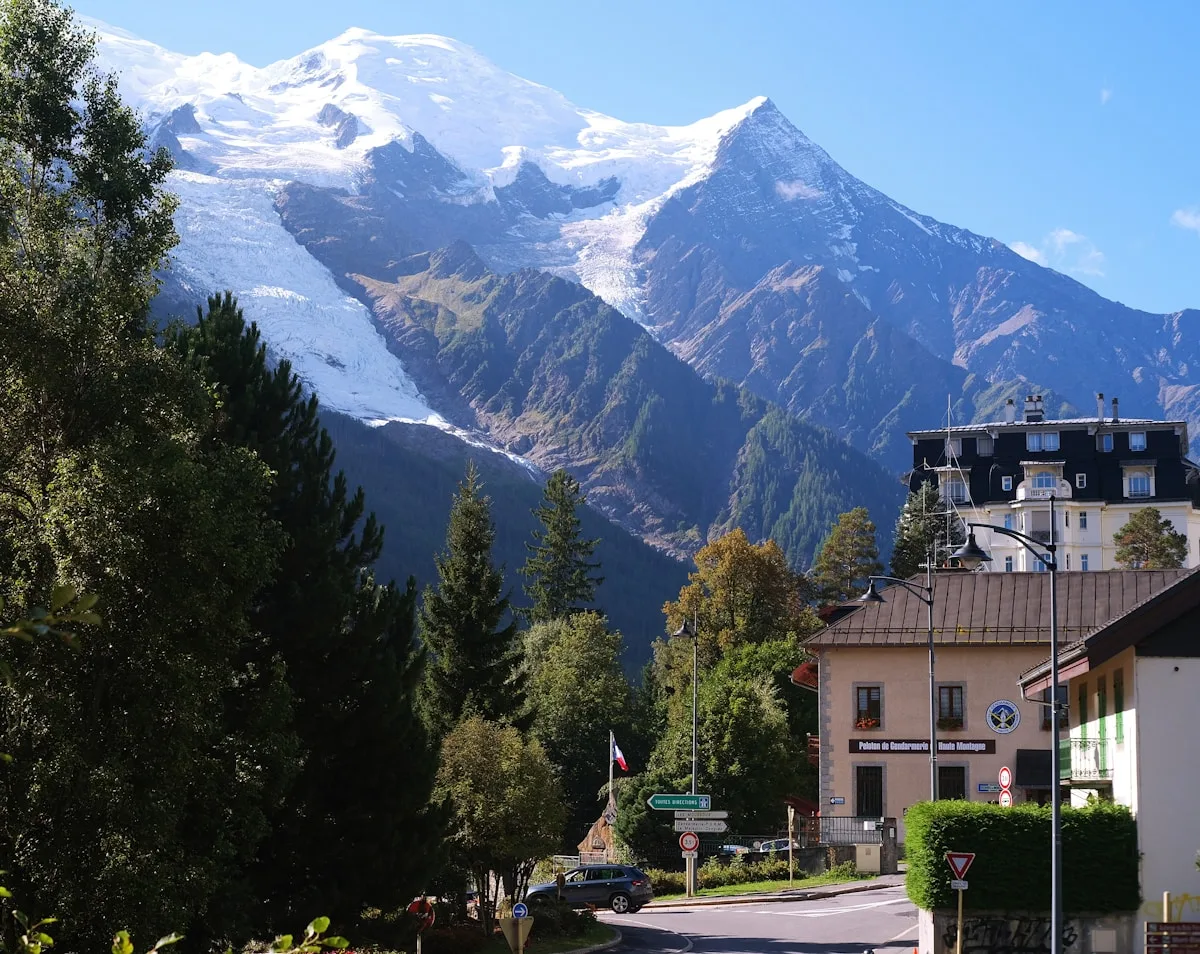
Chamonix sits in a narrow valley directly beneath Mont Blanc, and stepping out of your car here for the first time is one of those moments you remember. The scale of the mountains is absurd — granite needles and glaciers hanging right above town. For road trippers arriving via Geneva, it takes about 1 hour 15 minutes on the A40 motorway, making it one of the fastest routes from airport to genuine Alpine drama.
What makes Chamonix special as a base — not just a stop — is the density of things you can do without driving far. The Aiguille du Midi cable car, the Montenvers Railway to Mer de Glace, the Brévent-Flégère lift system, and dozens of valley-floor trails are all accessible from town. You could spend three days here and never repeat an experience.
The valley also functions as a crossroads. The Mont Blanc Tunnel connects you to Courmayeur in Italy in about 15 minutes of driving, while the Col des Montets leads northeast toward Martigny and the Swiss Valais. That cross-border positioning is hard to match from any other single base in the western Alps.
The honest downside is parking, especially in July and August. Chamonix Centre gets genuinely congested, and if you arrive after 10 AM on a sunny summer day, you may circle for 20 minutes before finding a spot. The sub-area you choose solves or creates this problem, so read the best-areas section carefully before booking.
Getting to Chamonix by car from Geneva
From Geneva Airport, the drive to Chamonix is straightforward: take the A40 motorway (Autoroute Blanche) southeast through Bonneville and Cluses, then exit at Passy and follow signs for Chamonix via the N205. The total distance is about 110 km, and without traffic it takes 1 hour 15 minutes. Allow an extra 20 to 30 minutes on Friday afternoons or summer Saturday mornings when the valley fills up.
France uses toll booths rather than the vignette system you will encounter in Switzerland. The A40 toll from Geneva to the Chamonix valley exit costs around €10 one way. You can pay by card at the booth — no advance sticker purchase needed. This is a key difference if you are combining French and Swiss legs in your trip.
If you are picking up a rental car at Geneva Airport, be aware that the airport straddles the French-Swiss border. Most rental desks are on the Swiss side, but you can drive into France without any border stop. Make sure your rental agreement covers France if your provider is Swiss-based — most major companies include it automatically, but it is worth confirming.
An alternative scenic approach is to drive via Megève instead of the direct A40. This adds about 30 minutes but takes you through one of the prettiest Alpine towns in Haute-Savoie. It is worth considering on your departure day if you want a change of route.
Once in the valley, navigation is simple. The N205 runs the length of the Chamonix valley floor from Les Houches at the western entrance to Argentière at the northeastern end. Everything is essentially on one road.
Best areas to stay in the Chamonix valley
Chamonix Centre is where most first-time visitors want to be, and the appeal is genuine. The pedestrianized Rue du Moulin and surrounding streets are lined with restaurants, outdoor-gear shops, and bakeries. The Aiguille du Midi cable car station is a 10-minute walk from the town center, and you can reach the Montenvers Railway for Mer de Glace on foot too. Evening atmosphere is lively without being rowdy — it feels like a proper mountain town rather than a resort. The downside is cost (expect €120 to €250 per night for a decent double) and parking. Parking du Mont Blanc is the main covered garage in the centre and charges around €15 to €20 per day, but it fills up by mid-morning in peak summer.
Les Houches sits at the valley entrance, about 10 minutes by car from Chamonix Centre, and it is the area I recommend most often for road trippers. Accommodation runs €80 to €150 per night, street parking is usually available without stress, and you have direct motorway access for day trips toward Annecy, Geneva, or the Swiss side without driving through Chamonix traffic. The village has its own cable car (Le Prarion), a handful of good restaurants, and a genuine local feel that central Chamonix has largely lost. The trade-off is real though — you will need to drive or take the valley bus for the Aiguille du Midi and most trailheads.
Argentière occupies the upper end of the valley, about 8 km northeast of Chamonix Centre. It has a quiet village character with stone buildings and a small church square. Hikers love it because the Grands Montets lift system and the approach to the Col des Montets are right there. If your next destination is Switzerland — Martigny, Sion, or the Valais — staying in Argentière positions you perfectly for a morning departure over the col. Parking is noticeably easier than in the centre, and rates are moderate.
Les Bossons is a small settlement between Les Houches and Chamonix Centre, directly below the Bossons Glacier. It is the quietest option in the valley — essentially residential with a few guesthouses and chalets. If you want to sleep with your window open and hear nothing but the river, this is your spot. You are 5 minutes from the centre by car but a world away in atmosphere. Parking is essentially a non-issue here.
For most road trippers doing 2 to 3 nights, Les Houches offers the best balance of value, parking ease, and route flexibility. If walkable restaurants and evening buzz matter more to you, book Chamonix Centre and accept the parking premium. Argentière is the pick if you are hiking-focused or heading to Switzerland next.
- Chamonix Centre: best walkability, restaurants, and cable car access — €120 to €250/night, tight parking
- Les Houches: best for drivers — easy parking, motorway access, €80 to €150/night, 10 min to centre
- Argentière: best for hikers and Switzerland-bound travelers — village feel, moderate prices
- Les Bossons: quietest option, glacier views, minimal services, easiest parking
Day trips and activities from Chamonix
The Aiguille du Midi cable car is the headline experience. It takes you from 1,035 m in the valley to 3,842 m in about 20 minutes — the views of Mont Blanc, the Vallée Blanche, and the surrounding peaks are staggering. Tickets cost approximately €65 return for adults. Book online in advance during July and August to avoid the queue, and try to go early morning when visibility is best and crowds are lighter. There is an intermediate station at Plan de l'Aiguille (2,317 m) where you can break the journey and hike the balcony trail back down.
The Montenvers Railway departs from Chamonix Centre and climbs to the Mer de Glace, the largest glacier in France. The glacier itself has retreated dramatically and the scale of that retreat is striking and sobering in person. A cable car descends from the railway station to an ice cave carved into the glacier face each year. The round trip takes about 2 to 3 hours including time at the glacier. The Brévent-Flégère cable car system on the opposite side of the valley offers the best panoramic views of the Mont Blanc massif and connects to excellent intermediate hiking trails — it tends to be less crowded than the Aiguille du Midi.
For a cross-border day trip, drive through the Mont Blanc Tunnel to Courmayeur in Italy. The tunnel toll is approximately €50 round trip, and the drive takes about 15 minutes portal to portal. Courmayeur has excellent Italian restaurants, a charming pedestrian center, and the Skyway Monte Bianco cable car on the Italian side. You can comfortably do lunch in Italy and be back in Chamonix by mid-afternoon.
The Col des Montets route northeast from Argentière leads over a modest pass (1,461 m) and down to Vallorcine and eventually Martigny in Switzerland. It is a beautiful drive through forest and open meadows, and the Emosson dam viewpoint is a short detour from the route. From Martigny you can continue to Montreux along the Rhône valley or south toward Sion and the Valais passes. This is one of the most rewarding half-day drives from Chamonix.
In summer, the Le Tour area at the far end of the valley has a gondola that accesses high-altitude hiking with fewer crowds than the more famous lifts. The Lac Blanc hike from the Flégère cable car is another standout — a 2 to 3 hour round trip to a mountain lake with a direct view of Mont Blanc that is genuinely one of the best short hikes in the Alps.
Food and dining in Chamonix
Chamonix has the best restaurant scene in the French Alps outside of major cities. The pedestrianized streets around Rue du Moulin are where most of the action is — you can walk from end to end in 10 minutes and pass a dozen options ranging from pizza to high-end Savoyard cuisine. Expect to pay €15 to €25 for a main course at mid-range places, or €30 and up at the more polished restaurants.
For traditional Savoyard food, La Calèche on Rue du Docteur Paccard is a reliable choice — tartiflette, raclette, and fondue done properly in a cozy stone-and-wood interior. It gets busy after 7:30 PM in summer so arriving early or booking ahead is smart. If you want something more casual, Munchie near the main square does excellent burgers and has a relaxed terrace atmosphere that suits families and tired hikers equally well.
The Chamonix market runs on Saturday mornings in the town centre and is worth structuring your stay around. Local cheeses (Reblochon, Beaufort, Tomme de Savoie), charcuterie, bread, and seasonal fruit are all excellent and significantly cheaper than restaurant meals. If you have apartment accommodation, a market morning followed by a picnic at one of the valley viewpoints is one of the best days you can have here.
Les Houches has fewer dining options but enough to avoid driving into Chamonix every evening. There are a couple of solid pizzerias and at least one good crêperie. Argentière has a handful of restaurants clustered around its small square — the portions tend to be generous and the prices a step below Chamonix Centre.
One practical note: many Chamonix restaurants close for a gap between lunch and dinner service (roughly 2 PM to 7 PM), which can catch visitors off guard. If you are coming off a day trip and arrive hungry at 4 PM, a boulangerie or the Carrefour supermarket near the centre will be your best options.
Booking tips and parking strategy
Book early for July and August — Chamonix is one of the most popular summer destinations in the French Alps, and parking-friendly properties in Les Houches disappear first. Free cancellation policies are worth prioritizing if your route is still flexible. Shoulder season (June and September) offers dramatically lower prices, thinner crowds, and most cable cars still running.
For parking in Chamonix Centre, Parking du Mont Blanc is the main covered option — it is centrally located near the Aiguille du Midi cable car station and charges around €15 to €20 per day. There are also open-air lots along the river, but these fill quickly in summer. If your hotel in the centre does not include parking, budget the garage cost into your nightly rate when comparing with Les Houches options that include free parking.
If you are combining Chamonix with Swiss destinations, note that France uses toll booths on motorways while Switzerland requires a vignette sticker (CHF 40 for the year). You will need both if your route crosses the border. The Col des Montets crossing into Switzerland is toll-free, but once you hit the Swiss motorway system you need the vignette. Budget for the Mont Blanc Tunnel toll separately — approximately €50 round trip — if you plan the Courmayeur day trip.
For a Geneva-start itinerary, Chamonix pairs naturally with Montreux or Interlaken as a second base. Two nights in Chamonix followed by a transfer day into Switzerland via the Col des Montets is one of the most efficient and scenic sequences for a 7-day trip. Three nights works if you want to add the Courmayeur day trip or a full hiking day without feeling rushed.
One tip that saves real hassle: fill up your fuel tank in Les Houches or at the Carrefour station near the A40 exit. Fuel in Chamonix Centre is more expensive, and the stations are harder to access with narrow streets and summer traffic.
Frequently Asked Questions
Is Chamonix a good base for an Alps road trip?
Yes — it combines dramatic Mont Blanc scenery, proximity to Geneva Airport (about 1h15), and cross-border access to Italy via the Mont Blanc Tunnel. The valley also connects to Switzerland over the Col des Montets, making it a natural starting point for multi-country itineraries. The main consideration is parking in the centre during peak summer.
Should I stay in Les Houches or Chamonix Centre?
Les Houches is the better choice for road trippers — parking is easier, accommodation costs run €80 to €150 versus €120 to €250 in the centre, and you have direct motorway access without driving through town traffic. Chamonix Centre is better if walkable restaurants and evening atmosphere are your priority and you are willing to pay for parking at Parking du Mont Blanc.
How many nights should I stay in Chamonix?
Two nights covers the highlights comfortably — the Aiguille du Midi cable car on one day and a valley hike or Mer de Glace visit on the other. Three nights lets you add a day trip through the Mont Blanc Tunnel to Courmayeur in Italy or a full hiking day to Lac Blanc without feeling rushed.
Is parking difficult in Chamonix?
In Chamonix Centre during July and August, yes. The main covered garage (Parking du Mont Blanc) costs €15 to €20 per day and fills by mid-morning on sunny days. Street parking is limited and time-restricted. Les Houches, Argentière, and Les Bossons all have significantly easier parking, often free at your accommodation.
Can I drive from Chamonix to Switzerland in a day?
Easily. The Col des Montets leads from Argentière to Martigny in about 45 minutes, and from Martigny you can reach Montreux in another 45 minutes or Sion in 30 minutes. The col is a modest pass (1,461 m) that is open from roughly May to November and is perfectly manageable in a standard rental car.
How much does the Mont Blanc Tunnel cost?
The Mont Blanc Tunnel toll is approximately €50 for a round trip in a standard car. The drive through the tunnel takes about 15 minutes and brings you out in Courmayeur, Italy. Single-crossing tickets are also available if you are continuing your trip on the Italian side rather than returning the same day.
What is the best time of year to visit Chamonix for a road trip?
Mid-June to mid-September is the main summer season when all cable cars operate and hiking trails are snow-free at most elevations. July and August have the best weather but also the highest prices and worst parking pressure. June and September offer lower costs, fewer crowds, and most facilities still running — they are the sweet spot for road trippers who can be flexible with dates.
Plan Your Trip Further
Scenic Drives
Where to Stay
Itineraries
Help Us Help You
Tell us what would make this guide more useful for your trip.
We want every PlanTheAlps page to save you time, reduce stress, and help you make better travel decisions. Share what feels unclear, missing, or outdated, and we will use your feedback to improve the site for all visitors.
Current page focus: Where to Stay in Chamonix: Best Areas for Alps Road Trips (2026)