Switzerland, Austria, Italy • Alps-wide
Best Scenic Drives in the Alps: 10 Roads You Should Not Miss
The 10 most spectacular driving roads in the Alps — from Switzerland's Furka Pass to Austria's Grossglockner, with route details, opening dates, and planning tips for each.
Last updated: June 16, 2026
Staying overnight? Best areas to stay: Andermatt (Furka, Gotthard, Susten) · Interlaken · Zermatt.
Visitor Snapshot
Use this quick summary to make faster booking decisions before you dive into full details.
- Primary destination
- Alps-wide
- Nearby airports
- Alps-wide
- Suggested stay areas
- Alps-wide
Quick Answer
- ✓Best single drive: Grossglockner High Alpine Road (Austria)
- ✓Most famous: Stelvio Pass (Italy) — 48 hairpin bends
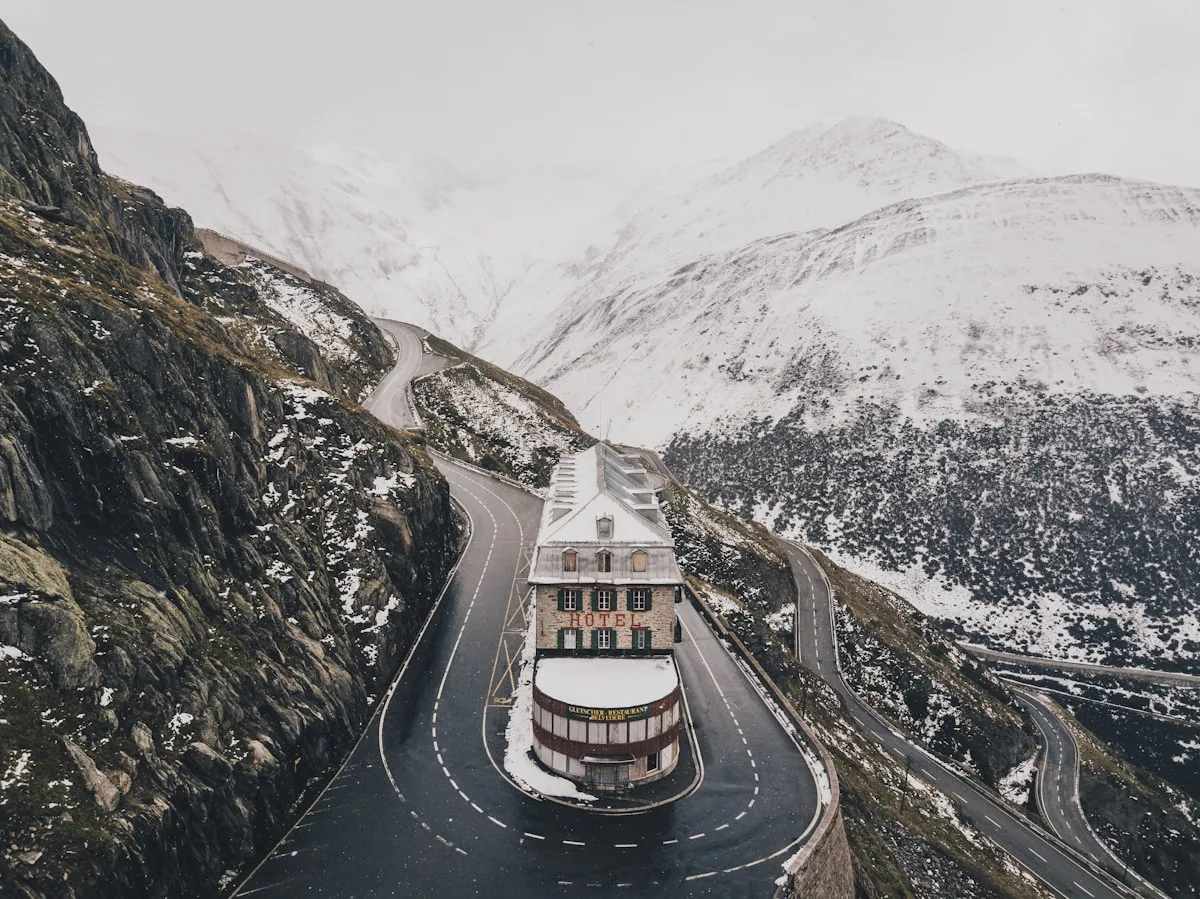
- ✓Most scenic Swiss pass: Furka Pass (James Bond location)
- ✓Most high passes are seasonal, roughly May or June to late October — but the Bernina, Julier, Lukmanier, Maloja and Ofen passes in Graubünden stay open all year
The 10 Best Scenic Drives in the Alps
The Alps contain some of the most spectacular driving roads on Earth. These are not just transport routes — they are destinations in themselves, engineered through seemingly impossible terrain with hairpin bends, dramatic viewpoints, and landscapes that change with every kilometre. Here are the 10 roads that deserve a place on every driving enthusiast's bucket list.
1. Grossglockner High Alpine Road (Austria) — 48 km through Hohe Tauern National Park, reaching 2,504 m. Glacier views depend on visibility, and marmot sightings are possible but cannot be promised. Toll: EUR 46.50 for a 2026 car day ticket. 2. Furka Pass (Switzerland) — 2,429 m, made famous by the James Bond film Goldfinger. Connects Uri to Valais via spectacular high-altitude moonscape. Free. 3. Stelvio Pass (Italy) — 2,757 m, the second-highest paved pass in the Alps with 48 legendary hairpin bends on the eastern approach. Free. 4. Bernina Pass (Switzerland) — 2,328 m, connects Engadin to Poschiavo with views of the Morteratsch Glacier. The adjacent Bernina Express rail line is a UNESCO site. Free.
5. Grimsel Pass (Switzerland) — 2,164 m, dramatic reservoir scenery connecting the Bernese Oberland to Valais. Combines perfectly with Furka and Susten for a loop. Free. 6. Susten Pass (Switzerland) — 2,224 m, considered one of the most beautiful Swiss passes with its sweeping curves and Steingletscher glacier views. Free. 7. Gotthard Pass (Switzerland) — 2,108 m, the original cobblestone road is still drivable and historically significant as the link between northern and southern Europe. Free. 8. Timmelsjoch (Austria/Italy) — 2,474 m, connects Ötztal in Austria to South Tyrol in Italy via a high-altitude border crossing. Toll: EUR 20 one-way / EUR 28 return for cars in 2026. 9. Silvretta High Alpine Road (Austria) — 2,032 m, usually a classic Montafon-to-Paznaun reservoir drive, but the full through-road is expected to stay closed until summer 2030 after repeated rockfalls and mudslides since 2024 (the Tyrol side is open toll-free as far as the Vermunt reservoir). Check the official status before planning it. 10. San Bernardino Pass (Switzerland) — 2,066 m, less crowded than its famous neighbours, linking Hinterrhein to the Italian-speaking Misox valley — both in Graubünden — through beautiful wild scenery. Free.
- Grossglockner: Austria's #1 scenic road, 48 km, EUR 46.50 car day-ticket toll
- Furka Pass: James Bond fame, 2,429 m, free
- Stelvio Pass: 48 hairpins, 2,757 m, Italy's icon, free
- Bernina Pass: glacier views, UNESCO railway alongside, free
- Susten Pass: sweeping curves and glacier, often called Switzerland's prettiest
Planning Tips for Alpine Pass Driving
Start early in the morning — not just to avoid traffic, but for the best light and clearest views. Mountain clouds typically build from late morning, so a 7:00 or 8:00 departure gives you the best photography conditions and clearest panoramas. By early afternoon, many passes are partly shrouded in cloud.
Driving any of these in shoulder season? Check what a winter rental includes — chains are almost always a paid extra.
Drive these roads for the experience, not the speed. Budget 2–3 times longer than GPS suggests, because you will want to stop at viewpoints, take photos, and simply absorb the scenery. On a road like the Grossglockner, the 48 km drive can easily fill 3–4 hours with stops at the Kaiser-Franz-Josefs-Höhe glacier viewpoint and the Edelweissspitze panoramic point.
Car choice matters. A compact car is ideal for pass roads — easier to manoeuvre on tight hairpins and less stressed on steep gradients. Automatic transmission is recommended if you are not experienced with mountain driving, as the constant gear changes on steep switchbacks can be tiring. Ensure your brakes are in good condition — you will use them extensively on descents.
- Start driving by 7:00–8:00 for the best views and lightest traffic
- Budget 2–3x the GPS time for stops and photography
- Compact car recommended — easier on hairpins and gradients
- Automatic transmission reduces fatigue on switchbacks
- Check brake condition before tackling steep passes
Also on PlanTheAlps
Seasonal Access and Road Conditions
Most high Alpine passes are closed from November to May or June, depending on snow conditions. The exact opening dates vary each year and depend on snowfall, avalanche risk, and road clearing progress. The Grossglockner typically opens in early May; Swiss passes like Furka, Grimsel, and Susten usually open in early to mid-June. The Stelvio Pass often does not fully open until late May or early June.
The best months for pass driving are July and August, when almost every pass road is open and daytime temperatures at altitude are comfortable (10–20°C at pass level). September is also excellent — the light is golden, the crowds thin out, and most passes remain open until mid-to-late October. June can be hit-or-miss, with some passes still clearing snow early in the month.
Real-time pass status comes from the road operators themselves: the TCS pass portal (Switzerland), grossglockner.at, timmelsjoch.com and silvretta-bielerhoehe.at (Austria), and the Autonomous Province of Bolzano road service for the Stelvio. If a pass is marked as closed, do not attempt it — barriers are physically locked and the road conditions behind them are genuinely dangerous.
- Most passes open: late May to mid-June (varies by year and altitude)
- Best months: July, August (all open), September (golden light, fewer crowds)
- Passes close: October to November depending on snowfall
- Check TCS (Switzerland), ASFINAG (Austria), ANAS (Italy) for real-time status
- Never drive past closed barriers — conditions are genuinely dangerous
Also on PlanTheAlps
Frequently Asked Questions
What is the single best scenic drive in the Alps?
The Grossglockner High Alpine Road in Austria offers 48 km through Hohe Tauern National Park, with glacier views when visibility allows. The Stelvio Pass in Italy and Furka Pass in Switzerland are other scenic options.
When do Alpine passes open for driving?
Most high passes open between late May and mid-June, depending on snowfall. July and August are the most reliable months, though not every road is open even then — the Silvretta through-road is expected to stay shut until summer 2030. Most close again in October or November. Check official road authority websites for real-time status before planning your drive.
Are Alpine pass roads in good condition?
Yes — all major pass roads are well-maintained, with proper asphalt, guard rails, and clear markings. They are public roads used by locals, not just tourists. The Gotthard has an original cobblestone section, but even that is drivable in a regular car.
What type of car do I need for Alpine passes?
A regular compact car is fine for all major pass roads. You do not need 4WD or a special vehicle. Automatic transmission is recommended for comfort on steep switchbacks. Ensure your brakes are in good condition, as descents involve significant braking.
Plan Your Trip Further
Scenic Drives
- Tremola Road — the Gotthard's granite cobblestone climb
- Furka & Grimsel Pass Loop: Switzerland's Best One-Day Scenic Drive (2026 Guide)
- See the Alps' best drives combined: 14-Day Grand Alps Road-Trip Itinerary
- Susten Pass Scenic Drive (2026): Route Guide, Best Stops & Timing Tips
- Gotthard Pass Scenic Drive: Historic Cobblestones and Alpine Drama
Where to Stay
Itineraries
Help Us Help You
Tell us what would make this guide more useful for your trip.
We want every PlanTheAlps page to save you time, reduce stress, and help you make better travel decisions. Share what feels unclear, missing, or outdated, and we will use your feedback to improve the site for all visitors.
You are sharing feedback on: Best Scenic Drives in the Alps: 10 Roads You Should Not Miss